
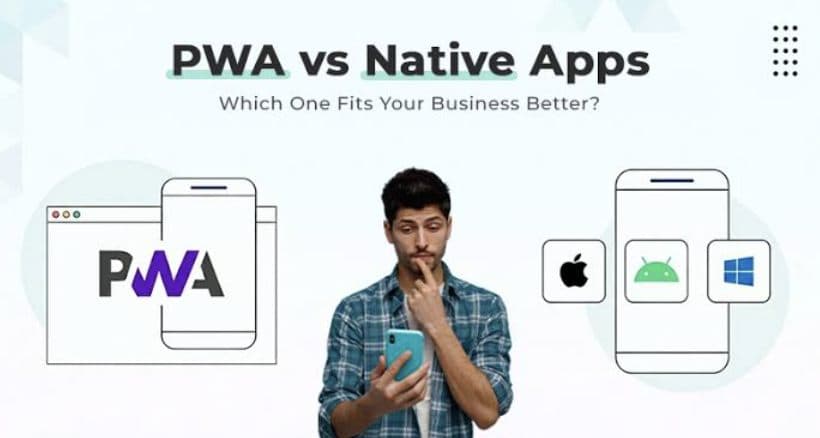
PWA vs Native App for Shopify: Which Should You Build?
Choosing between a PWA and a native app for a Shopify store comes down to one real question: does the store need to launch fast and reach customers who won't download from an app store, or does it need the deeper performance and push capability that only native software delivers. Mobile web converts at roughly 2.1 to 2.9 percent against 3.5 to 3.9 percent on desktop (Dynamic Yield, 2025), and both formats exist to close that gap, just on different timelines and with different tradeoffs.
The case for starting with a PWA
A PWA installs from the browser, add to home screen, no App Store or Google Play review. That means it can go live in days rather than weeks, which matters for a store that hasn't validated whether an app changes its numbers at all. It also captures customers who are willing to tap "add to home screen" but wouldn't go through a full app store download, a real segment for most stores.
Dockify, Bonsify's own Shopify App Store product, runs on exactly this model, an install prompt paired with a discount reward and install-to-purchase attribution, which makes the PWA route not just fast but measurable from day one.
The case for going native first
Native apps convert about 130 percent higher than mobile web (Venn Apps, 2025), a larger lift than most PWAs achieve, since native software isn't running inside a browser engine. Users spend 6.4 times longer per session in native apps (BuildFire), and push notification control is deeper, richer segmentation, better delivery reliability, more triggers to work with.
For stores with an established customer base and clear repeat-purchase behavior already, going straight to native can make sense, particularly in categories where the mobile-desktop conversion gap is largest. Furniture, at a 180 percent gap, and jewelry, at 138 percent (Eevy AI, 2026), are examples where the deliberation involved in the purchase rewards the deeper, faster native experience more than a faster launch timeline would.
The honest tradeoff
Neither format is a downgrade from the other. A PWA is faster to launch and lower-friction to install; a native app goes deeper on performance and push once it's live. Push notifications, at 20 to 26 percent open rates against 15 to 20 percent for email, work on both formats, though native gives more control over how they're delivered.
Some stores end up running both: a PWA for reach and fast iteration, a native app for the deeper repeat-customer experience. That's not overbuilding, it's matching the format to the customer behavior it's meant to capture.
How to actually decide
Store traffic volume, repeat purchase rate, and how much customers already trust the brand enough to commit to a download all factor into which format fits better, and those numbers differ enough between stores that a generic recommendation doesn't hold up well. Bonsify is a Shopify services company by FetchSky that builds native iOS and Android apps, PWAs, new Shopify stores, platform migrations, custom apps, and more, and the free audit looks at a store's actual data before recommending PWA, native, or both.
Ready to see what a done-for-you build looks like for your store? Start your free audit →
Generally yes, since there's no app store submission process involved, though the right choice depends on the store's goals rather than cost alone.
Yes, with more platform limitations than native push notification control offers.
That's a common path for stores validating app demand before committing to a longer native build, though it's not the only valid sequence.
Categories with large mobile-to-desktop conversion gaps, like furniture and jewelry, tend to reward native's deeper performance and browsing experience more.
Yes, some stores use a PWA for broader reach and a native app for deeper engagement with repeat customers.
A free audit reviews the store's actual traffic and repeat purchase data and recommends a format based on that, not a generic rule.
See what going native would change
Tell us about your Shopify store. We'll give you a straight answer.
Book a free audit